

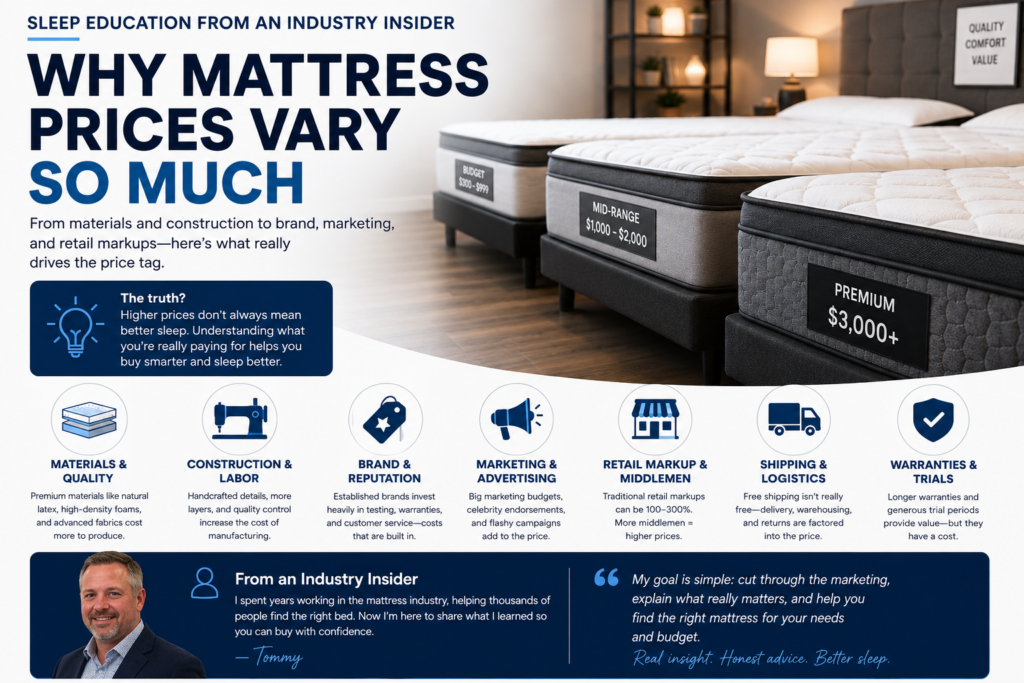
Why Mattress Prices Vary So Much? Sleep Education From an Industry Insider
I get this question all of the time.
Mattress shopping can feel incredibly confusing.
You walk into one store and see a queen mattress priced at $699.
Disclosure: Elite Sleep Reviews may earn commissions from qualifying purchases made through links on this page. This does not affect how mattresses are reviewed or ranked.
Then another mattress sitting just a few feet away costs $4,999.
Online, the confusion gets even worse.
Some brands advertise “luxury” mattresses for thousands of dollars, while others promise premium comfort at a fraction of the price.
So what actually causes mattress prices to vary so much?
After years working inside the mattress industry and helping customers compare everything from budget memory foam beds to ultra-premium luxury hybrids, I can confidently say:
Mattress pricing is influenced by far more than just comfort.
In this guide, we’ll break down the biggest factors that impact mattress pricing and help you understand what is — and is not — worth paying for.
1. Materials & Construction Quality
One of the biggest factors affecting mattress cost is the quality of materials used inside the mattress.
Higher-quality materials generally cost manufacturers more to produce and often improve:
- durability
- pressure relief
- cooling performance
- support consistency
- edge support
- motion isolation
Common material differences include:
Foam Density
Higher-density foams typically:
- last longer
- resist sagging better
- provide more consistent support over time
Lower-density foams are cheaper to manufacture but often break down faster.
This is one reason why some budget mattresses may initially feel comfortable but lose support much sooner.
Coil Systems
Not all coil systems are equal.
More expensive mattresses may use:
- individually wrapped pocket coils
- zoned support systems
- reinforced edge support
- higher coil counts
Cheaper mattresses may use:
- basic interconnected coils
- thinner gauge steel
- minimal edge reinforcement
Coil quality can significantly affect long-term durability and support.
Specialty Materials
Luxury mattresses often include:
- natural latex
- advanced cooling materials
- gel grid systems
- hand-tufting
- organic fabrics
- cashmere or wool covers
Some of these materials genuinely improve comfort and durability.
Others are primarily used for luxury branding and marketing.
2. Brand Positioning & Marketing
This is one of the least understood parts of the mattress industry.
Two mattresses with very similar internal constructions can sometimes have dramatically different prices simply because of branding.
Some companies position themselves as:
- luxury brands
- premium sleep systems
- high-end wellness products
That branding alone can increase pricing substantially.
In many cases, consumers are not just paying for the mattress itself.
They are also paying for:
- advertising
- influencer marketing
- celebrity endorsements
- retail commissions
- showroom expenses
- brand perception
This does not automatically mean expensive mattresses are bad.
Some premium models are excellent.
But higher pricing does not always guarantee better long-term comfort or durability.
3. Retail Markups
Many consumers are surprised to learn that mattress retail markups can be very high.
Traditional mattress stores often have significant overhead costs, including:
- showroom leases
- commissioned sales staff
- delivery operations
- advertising expenses
- inventory costs
Those costs are built into the final mattress price.
This is one reason online mattress companies became so popular.
Direct-to-consumer brands can sometimes offer similar materials at lower prices because they eliminate many traditional retail expenses.
However, online brands also spend heavily on digital advertising and affiliate marketing.
So while online mattresses may reduce some costs, marketing still plays a major role in pricing.
4. Cooling Technology & Luxury Features
Cooling has become one of the biggest selling points in the modern mattress industry.
You’ll often see features like:
- cooling gel foam
- phase change materials
- graphite infusion
- copper foam
- cooling covers
- airflow systems
Some cooling technologies genuinely help regulate temperature.
Others provide only modest improvements.
Consumers should understand that “cooling” is heavily marketed because sleeping hot is a common complaint.
In reality, body weight, room temperature, sheets, mattress protectors, and overall mattress design all affect sleep temperature.
Paying more for cooling technology does not always guarantee dramatically cooler sleep.
5. Warranty & Trial Period Costs
Long sleep trials and extensive warranties sound appealing — and they can provide real value.
But they also increase mattress pricing.
Companies offering:
- 100-night trials
- free returns
- white glove delivery
- long warranties
must factor those potential costs into their prices.
This is one reason premium brands often charge more.
However, consumers should understand that mattress warranties usually have limitations.
Many warranties only cover significant defects and may not cover normal comfort loss over time.
6. Handmade & Luxury Manufacturing
Some luxury mattress brands use:
- hand-tufting
- handcrafted construction
- premium imported materials
- small-batch manufacturing
These manufacturing methods genuinely increase production costs.
Brands in the ultra-luxury category may also focus heavily on aesthetics, craftsmanship, and exclusivity.
For some buyers, that experience matters.
For others, a more affordable mattress may provide similar sleep quality at a much lower price point.
What Actually Matters Most?
After helping customers compare mattresses for years, I learned something important:
The most expensive mattress is not always the best mattress.
The best mattress is usually the one that properly matches:
- your sleep position
- body type
- pressure relief needs
- firmness preference
- temperature preferences
- support requirements
Long-term comfort and support matter far more than flashy marketing.
How To Shop Smarter
When comparing mattresses, focus on:
Support & Alignment
A mattress should keep your spine properly aligned based on your sleep position.
Pressure Relief
Side sleepers especially need pressure relief around the shoulders and hips.
Durability
Look for higher-quality foams, strong coil systems, and reputable construction.
Realistic Expectations
No mattress completely eliminates every sleep issue.
Marketing often creates unrealistic expectations.
Comfort Over Branding
Don’t assume the most expensive mattress is automatically better for your body.
Final Thoughts
Mattress pricing can seem confusing because many factors influence cost.
Some price differences are based on legitimate material and construction improvements.
Others are driven heavily by branding, marketing, retail overhead, and luxury positioning.
The key is understanding what actually matters for your specific sleep needs.
My goal with Elite Sleep Reviews is to help consumers cut through the marketing and make more informed mattress decisions based on real-world mattress industry experience.
Understanding how mattress pricing works is one of the best ways to shop smarter, avoid unnecessary spending, and find a mattress that truly supports better sleep.
Related Sleep Education Articles
- What Mattress Salespeople Won’t Tell You
- Why Mattresses Sag Over Time
- How Long Should a Mattress Last?
- Latex vs Memory Foam
- What Mattress Firmness Is Best for Side Sleepers?
- The Truth About Mattress Warranties
