

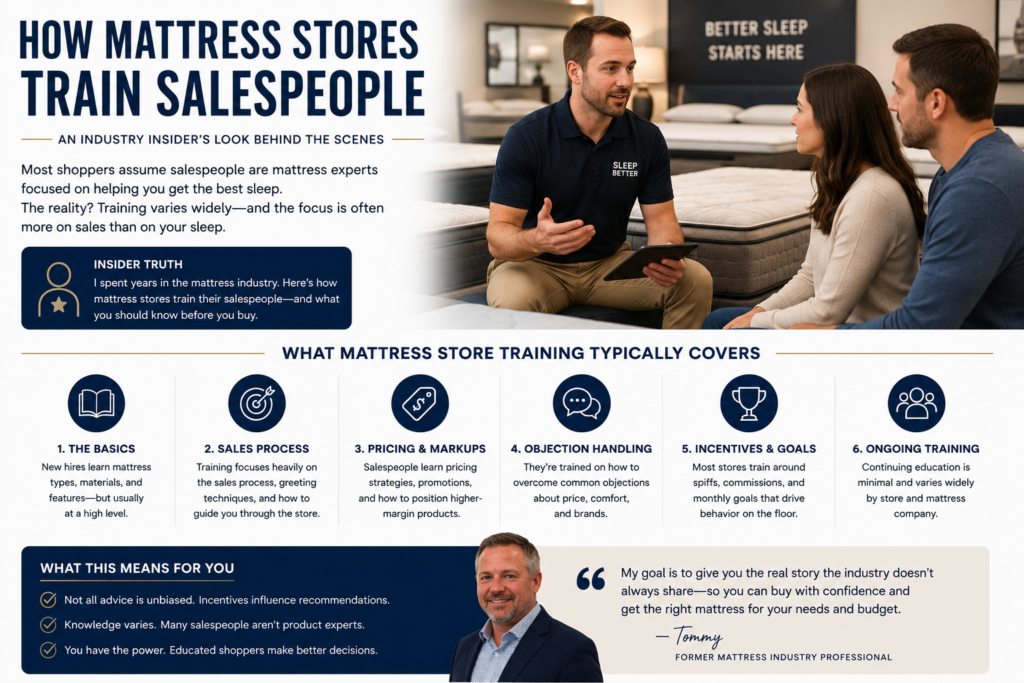
How Mattress Stores Train Salespeople
Sleep Education From an Industry Insider
Most consumers assume mattress salespeople simply walk the showroom floor and help customers choose a comfortable bed.
But behind the scenes, mattress sales training is often highly structured.
After spending years working inside the mattress industry, I learned that many retailers train salespeople using detailed systems designed to:
Disclosure: Elite Sleep Reviews may earn commissions from qualifying purchases made through links on this page. This does not affect how mattresses are reviewed or ranked.
- guide customer conversations
- increase close rates
- maximize average ticket size
- build urgency
- overcome objections
- improve financing approvals
- increase attachment sales
That does not automatically mean mattress salespeople are dishonest.
Many genuinely want to help customers sleep better.
However, understanding how mattress stores train salespeople can help consumers shop more confidently and recognize some of the common sales strategies used throughout the industry.
Why Mattress Stores Use Structured Sales Training
Mattresses are considered high-ticket emotional purchases.
Customers often shop for mattresses because they are:
- experiencing pain
- sleeping poorly
- replacing an old mattress
- frustrated with previous purchases
- concerned about long-term comfort
Because of this, mattress retailers invest heavily in training salespeople to build trust and guide buying decisions.
Many sales systems focus on:
- emotional connection
- lifestyle improvement
- pain-point discovery
- urgency
- financing options
- premium upgrades
The goal is usually to help customers feel confident enough to make a purchase during the showroom visit.
1. Discovery Questions
One of the first things mattress salespeople are trained to do is ask discovery questions.
These questions help identify:
- sleep position
- pain points
- current mattress issues
- comfort preferences
- budget range
- previous mattress experiences
Common questions include:
- Do you sleep on your side, back, or stomach?
- Are you sleeping hot at night?
- Do you wake up with pain?
- How old is your current mattress?
- What do you dislike about your current bed?
These questions are important because they help narrow down mattress recommendations.
However, they also help salespeople identify emotional buying triggers.
For example:
A customer mentioning severe back pain may be guided toward premium support systems or adjustable bases.
Someone frustrated with sleeping hot may be shown cooling mattresses with upgraded materials.
2. Building Emotional Connection
Mattress sales training often emphasizes emotional selling.
Why?
Because sleep affects:
- health
- mood
- energy
- recovery
- relationships
- productivity
Salespeople are often trained to connect mattress purchases to improved quality of life.
Examples may include discussing:
- better recovery
- reduced pain
- deeper sleep
- improved energy
- fewer disruptions between couples
Again, this is not always manipulative.
Good sleep genuinely matters.
But emotional positioning is a major part of mattress sales training.
3. The “Comfort Upgrade” Strategy
Many mattress stores train salespeople to start with higher-end models first.
This is often called:
- trading customers up
- premium anchoring
- top-down selling
The reason is simple:
If customers experience premium comfort first, lower-priced models may feel less impressive afterward.
Luxury mattresses often feature:
- thicker comfort layers
- upgraded cooling materials
- enhanced pressure relief
- adjustable base compatibility
- premium fabrics
Salespeople are frequently trained to showcase these benefits early in the shopping process.
This can sometimes make mid-range mattresses feel more affordable by comparison.
4. Financing Conversations
Financing plays a huge role in modern mattress retail.
Many customers focus more on:
- monthly payment
- promotional financing
- interest-free periods
than total mattress price.
Because of this, mattress sales training often includes:
- payment-focused selling
- financing presentation techniques
- objection handling around price
For example:
A $4,000 mattress may sound expensive initially.
But framed as:
“about a few dollars per night over several years”
or
“less than your daily coffee habit”
it can feel psychologically more manageable.
This type of reframing is extremely common throughout the industry.
5. Attachment Sales & Bundles
Many mattress retailers train salespeople to increase ticket size through accessories and bundles.
Common add-ons include:
- adjustable bases
- mattress protectors
- pillows
- sheets
- foundations
- delivery upgrades
Stores often measure:
- average ticket size
- accessory attachment rates
- adjustable base penetration
because these products significantly increase profitability.
Some accessories genuinely improve the sleep experience.
For example:
Mattress protectors can help maintain warranty eligibility.
Adjustable bases can improve comfort for some sleepers.
However, consumers should understand these products are also major profit drivers for retailers.
6. Objection Handling Training
Mattress salespeople are heavily trained on objection handling.
Common customer objections include:
- “We need to think about it.”
- “It costs more than we expected.”
- “We want to shop around.”
- “We saw something cheaper online.”
- “We’re not ready today.”
Sales training often teaches techniques to:
- reduce hesitation
- create urgency
- reinforce value
- compare long-term cost
- emphasize financing options
Again, some of this is simply part of professional sales.
But consumers should recognize that hesitation is expected during mattress shopping, and stores actively train teams on how to respond.
7. Why Showroom Comfort Can Be Misleading
One of the biggest things consumers should understand:
A mattress that feels amazing for five minutes in a showroom may not always perform well long term.
Showroom testing often favors:
- softer comfort
- immediate pressure relief
- plush feel
But long-term comfort also depends on:
- support
- durability
- body type compatibility
- sleeping position
- foam quality
This is why many experienced salespeople eventually learn that:
Initial comfort and long-term satisfaction are not always the same thing.
What Consumers Should Focus On Instead
When shopping for a mattress, focus less on pressure-driven sales tactics and more on:
Proper Support
Your mattress should support spinal alignment based on your sleep position and body type.
Durability
Look for quality materials that will hold up over time.
Pressure Relief
Side sleepers especially need proper pressure relief around the shoulders and hips.
Realistic Expectations
No mattress solves every sleep issue.
Marketing often exaggerates results.
Your Individual Needs
The best mattress for someone else may not be the best mattress for you.
Final Thoughts
Mattress sales training is designed to help stores increase sales, improve customer confidence, and maximize profitability.
Some of these strategies genuinely help customers find better mattresses.
Others are heavily influenced by psychology, financing, and premium product positioning.
Understanding how mattress stores train salespeople helps consumers become more informed shoppers and avoid making decisions based solely on marketing or showroom pressure.
The best mattress decisions usually come from:
- education
- realistic expectations
- understanding materials
- matching support to your sleep needs
- focusing on long-term comfort instead of short-term showroom impressions
My goal with Elite Sleep Reviews is to help consumers better understand how the mattress industry actually works so they can make smarter, more confident buying decisions.
Related Sleep Education Articles
- Why Mattress Prices Vary So Much
- What Mattress Salespeople Won’t Tell You
- Why Mattresses Sag Over Time
- The Truth About Mattress Warranties
- How Long Should a Mattress Last?
- Best Mattress Firmness for Side Sleepers
