

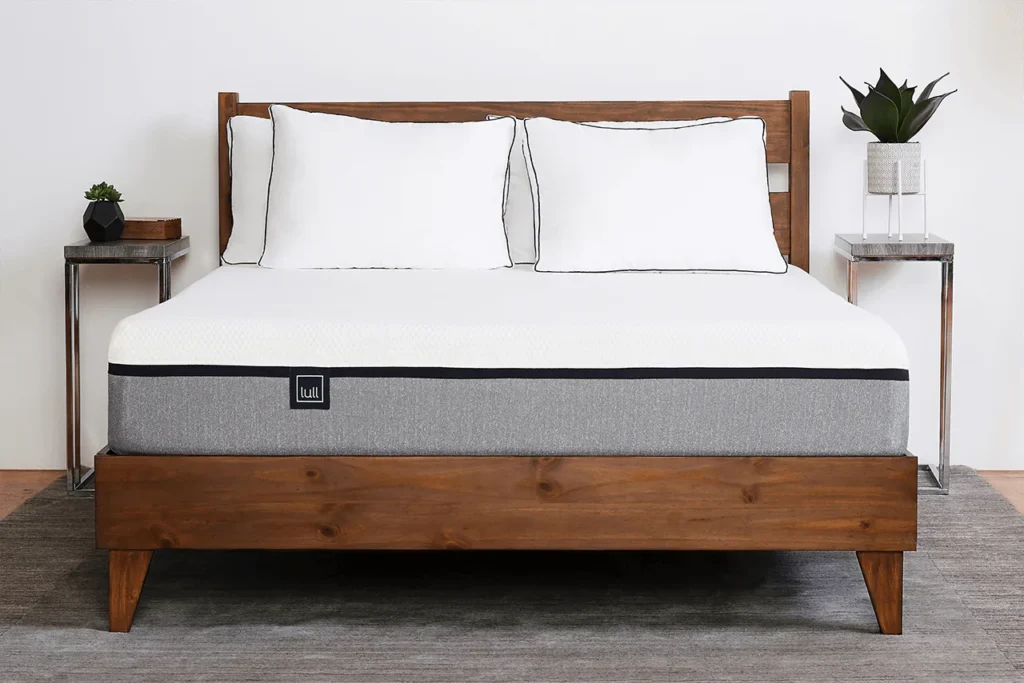
Lull mattress with balanced all-foam comfort designed for side and back sleepers.
The Lull Mattress is one of the earliest direct-to-consumer all-foam beds, known for its universally comfortable feel and balanced performance. It’s often described as a “good all-around foam mattress” — but is it good for you? That’s what this review will answer.
We’ll break down comfort, support, cooling, motion isolation, edge support, durability, and who the Lull Mattress truly works best for — without marketing hype.
How We Test Mattresses
Our reviews are based on firsthand, hands-on testing and real-world sleep experience. We evaluate mattresses using consistent criteria, including pressure relief, spinal alignment, motion isolation, temperature regulation, and durability. We do not use any fancy gimmicks, proprietary scoring systems, or manufacturer-provided ratings. Each mattress is tested the same way so comparisons are fair, transparent, and based on actual performance, helping readers make informed, trustworthy buying decisions. Read our full mattress testing methodology!
Disclosure: Elite Sleep Reviews may earn commissions from qualifying purchases made through links on this page. This does not affect how mattresses are reviewed or ranked.
🛏️ Quick Summary
- Best for: Side sleepers, combination sleepers, budget-conscious buyers
- Not ideal for: Strict stomach sleepers, heavy sleepers who need extra support
- Firmness: Medium (about 5–6/10)
- Mattress type: All-foam (two foam layers)
- Sleep positions: Side, back, some combination
- Trial & warranty: 100-night trial, 10-year warranty
🧠 What Makes the Lull Mattress Unique?
The Lull Mattress was one of the original bed-in-a-box mattresses. It aims to hit the “sweet spot” for most sleepers with a medium firmness that isn’t too soft and not too firm — similar to the classic memory foam feel but with fewer heat issues and a smoother response.
Key features include:
- Two foam layers (comfort + support)
- Transition foam to reduce sink
- Breathable, knit cover
- All-foam responsiveness
You can view current pricing and available promotions directly on Lull’s website.
💤 Comfort & Feel
The Lull Mattress offers a balanced, memory-foam-like feel with gentle contouring and minimal deep sink. It’s best described as moderately adaptive — it responds faster than traditional memory foam but is not as springy as hybrid mattresses.
Who will like this feel:
- Side sleepers who want foam contouring
- Back sleepers who like balanced support
- People who dislike overly plush or overly firm surfaces
🧍 Firmness & Support
The Lull’s firmness lands around 5–6/10 on most firmness scales, meaning it’s in the medium range.
- Side sleepers: Good pressure relief at shoulders/hips
- Back sleepers: Adequate support, especially at moderate body weights
- Stomach sleepers: May lack firm support, especially under hips
This firmness makes it a solid “middle-of-the-road” choice, but heavier sleepers may find it a bit too soft long-term.
🌬️ Cooling & Temperature Regulation
All-foam beds often trap more heat than hybrids or innersprings, and the Lull Mattress is no exception. However, compared to older memory foam designs, it does a better job with airflow thanks to:
- Breathable cover
- Open-cell foam that allows subtle airflow
Hot sleepers may still prefer a hybrid mattress for best temperature control, but the Lull is better than average for all-foam beds.
🔁 Motion Isolation (Couples)
One of the Lull’s strengths is excellent motion isolation — foam layers absorb movement well, meaning:
- Partners tossing/turning won’t disturb you
- Pets hopping on/off are less noticeable
- Great for light sleepers and couples
In this category, it outperforms most hybrid beds.
🔧 Edge Support
As a traditional all-foam mattress, edge support is fair but not strong.
- Moderate edge feel near the perimeter
- Some compression when you sit or lie near the edge
If edge stability is essential (e.g., for getting in/out of bed easily), hybrids like Helix or Purple usually outperform Lull.
🪶 Durability & Longevity
The Lull Mattress uses standard foam layers that break in over time. Many users find:
- Initial comfort persists well
- Some light indentation over years
- Strong performance for average body weights
Heavier sleepers may see a bit more wear over time compared to hybrid or innerspring beds.
🧾 Trial, Warranty & Returns
- Trial: 100 nights
- Warranty: 10 years (standard)
This is solid for bed-in-a-box mattresses. Returns are typically easy through customer service if you decide it isn’t right for you.
✅ Pros & Cons
Pros
- Balanced comfort for broad sleep styles
- Excellent motion isolation
- Great for side sleepers
- Avoids deep sink of older memory foam
- Typically good mid-range price point
Cons
- Sleepers who sleep hot may want better cooling
- Not firm enough for many stomach sleepers
- Edge support is average
- Heavy sleepers may need stronger support
🧠 Final Verdict
The Lull Mattress is a reliable all-foam mattress with a universally appealing feel that works well for many side sleepers and back sleepers. It’s not super specialized, but that’s exactly its strength — it’s a safe, all-around choice at a mid-range price point.
If you prioritize motion isolation and balanced comfort in an all-foam design, it’s worth serious consideration. But if you sleep very hot or require firmer lumbar support, a hybrid mattress might be a better bet.
🔗 Helpful Next Steps
- Compare with hybrids in our Helix Midnight vs Nectar comparison
- See top picks in our Best Mattresses Buyer’s Guide
- Take our Find the Right Mattress Quiz
Prefer buying in-store or want to compare retailers?
👉 Check availability at Lull
By Thomas Saunders, Editor — Elite Sleep Reviews
This review was written and edited by Thomas Saunders, Editor at Elite Sleep Reviews. With years of hands-on experience in the mattress and sleep industry and extensive product research, Thomas focuses on evaluating comfort, support, durability, and real-world performance to help readers make confident, informed mattress decisions.
